Welcome to newsletter no. 2 - 2026
Just over a week ago I attended People Analytics Meetup Sweden, an event packed with experienced practitioners who work with people analytics every day. What strikes me is that we are getting more and more HR systems in place - but the frustration is real. We are not using all the data we collect for insights and action. That is what this month's column is about, and it will also become a podcast episode since there is much more to say on the topic. And right after I wrote the column, I found the same type of frustration reflected in this year's HR Barometer.
Beyond that, this is an eventful edition. Phenom and Docebo are making strategic acquisitions. The first Swedish-Norwegian study on the four-day work week has presented its results and Sweden's AI strategy has been launched. And there is an interesting signal from the EdTech world that I think the HR tech industry should take seriously - about what it actually takes for technology to deliver real value rather than pretty dashboards.
_____________________________________
Thank you to this month's sponsor:
Having data about your employees is not enough - you need to use it.

In this webinar, Nina Zhovnartsuk and Anders Johrén show you how to turn people data into concrete business decisions using the Nyckeltalsinstitutet model Personallivscykeln©. No vague talk about soft values - just figures you can bring to the management team.
Aren’t you already subscribed to the newsletter?
⇢ Register your e-mail here for the newsletter in English.
⇢ Sign up with your email here for the newsletter in Swedish.
I recently attended People Analytics Meetup Sweden, organised by George P Kovacs and Julia Nagy - two of Sweden's most experienced people analytics practitioners. The event was full of seasoned practitioners having concrete discussions, all working with people analytics in some capacity.
There was a clear frustration in the room: we know how people analytics can contribute, but most organisations are not using their data - not in the way that specialists know actually makes a difference.
It is not down to a lack of ambition. Across the Nordics, 67% of organisations say that improved HR data and analytics is one of the key drivers behind their technology investments. Yet actual usage sits at just 28-38%. Sweden ranks 34th out of 37 countries globally in people analytics maturity - and the picture is similar across the rest of the Nordics.
The impact fails to materialise in most organisations. Dashboards that only a handful of people use. Models that predicted something important - and then just sat there. Time invested in an area that could fundamentally transform profitability, but that goes unnoticed.
One thing from this meetup put into words something I knew but had never articulated so clearly:
Analytical capability and actual use are not the same thing.
Tools and competence must go hand in hand. Timing, trust, and change management matter just as much as the data itself. And only 23% of Nordic organisations have a formal HR technology strategy that is actively maintained - without a strategy, technology is usually used for administration rather than insights.
A commonly used example in HR: with an average monthly salary of 40,000 SEK and a turnover cost of 6-18 months' salary, every new hire who leaves within a year costs between 240,000 and 720,000 SEK - and the data to prevent this is often already in the organisation. What is missing is the ability to use it.
The most successful cases at the event had one thing in common: they invested early in how the organisation actually uses the data - communication, training, and building trust around the insights. It was not the analyses themselves that created impact. It was the people and change management work.
And this is not just about analytics. AI is the next big step for HR - but AI requires exactly what many organisations lack: structured, reliable data and a culture where data is actually used for decisions. Those who do not build that foundation now will struggle to benefit from AI tomorrow.
What would your organisation need to make this work?
Curious to hear more? Listen to the next episode of The HR Digi Podcast where I explore the analytics theme in depth.
Brighteye Ventures has renamed its annual report from "EdTech" to "Learning & Work" - a clear sign that the sector now overlaps with corporate learning, talent mobility, and productivity tools. Investments in Europe more than doubled in 2025 to €1.6 billion.
Brighteye introduces a "learning & work value chain" framework: Learn → Place → Perform → Progress. Learning is increasingly funded as a driver of work outcomes - not as an end in itself.
👉 https://www.brighteyevc.com/sidekick-posts/the-european-learning-work-funding-report-2026
Norway's Minister of Education Kari Nessa Nordtun set the tone at Bett in London, the world's largest educational technology conference. The message was clear: EdTech that has borrowed too heavily from the "attention economy" - focused on engagement, gamification, and vague promises of impact - is no longer welcome in Norwegian classrooms. Instead, tools that are evidence-based, user-led, and have clear data practices are in demand.
As Nordic EdTech News summarises it: "What's being challenged isn't technology in education per se, but a particular model of EdTech."
Why is this relevant for HR? The same criticism can be directed at large parts of the HR tech market. Employee engagement platforms that measure clicks instead of actual engagement. Wellness apps with unclear impact. Performance management systems that nobody uses. The focus has often been on dashboards and adoption rates rather than real business value.
When the public sector raises its standards, the corporate market tends to follow. Expect Nordic HR buyers to start asking harder questions: What is the actual impact? Who owns the data? Does the tool support our managers and employees - or does it just add complexity?
👉 https://nordicedtech.substack.com/
Swedish results are now available. Karlstad University, together with 4 Day Week Global, has conducted the first Swedish pilot study on shorter working hours. Eleven organisations - nine in Sweden and two in Norway - tested the 100-80-100 model: 100% pay, 80% working time, 100% output.
Results after six months: reduced stress and anxiety, better sleep, higher job satisfaction and perceived work capacity. Productivity was unchanged or higher. Ten out of eleven organisations chose to continue after the pilot.
Research lead Lena Lid Falkman emphasises that the results "should be interpreted with caution" - the study lacks a control group and is based on voluntary participation. But the pattern aligns with the international 4 Day Week study (Nature Human Behaviour, July 2025), which had control groups and 2,900 participants.
The most interesting finding from an HR perspective: the improvements did not come from employees "working faster" - they came from reorganised work - fewer meetings, clearer priorities, and increased shared responsibility. Shorter working hours became the incentive that made the change happen.
US-based Phenom, a leading talent experience platform, has made two strategic acquisitions in January and February to strengthen its AI capabilities.
First came Seattle-based Included AI - an agentic people analytics platform that handles inconsistencies and gaps in HR data. Then came UK-based Be Applied - a solution for cognitive skills assessments that validates candidates' actual abilities.
The acquisitions reflect two strong trends: the need for better data-driven HR and the shift towards skills-based recruitment. According to the World Economic Forum, 63% of employers see skills gaps as the biggest obstacle to business transformation by 2030.
👉 https://www.phenom.com/press-release/phenom-acquires-included-ai-agentic-analytics
👉 https://www.phenom.com/press-release/phenom-acquires-be-applied-skills-ai
Canadian learning platform Docebo has acquired French company 365Talents, an AI-driven platform for skills intelligence and workforce analytics, for approximately $55 million.
365Talents, founded in 2015 in Lyon, helps organisations map competencies in real time using AI agents. The platform is used by over 2 million employees in 60+ countries, including at Crédit Agricole, Veolia, and Société Générale.
The acquisition connects skills intelligence with learning - so that identified skills gaps can automatically trigger relevant training initiatives.
"In today's economy, skills only matter if they can be activated," says Alessio Artuffo, CEO of Docebo. "By bringing 365Talents into Docebo, we use AI agents to make skills a living capability that drives learning, career mobility, and workforce decisions in real time."
365Talents will retain its brand during 2026 while the platforms are gradually integrated.
👉 https://www.docebo.com/company/newsroom/docebo-acquires-365talents/
The second International AI Safety Report has been released, authored by over 100 AI experts, with the support of 30 countries. It is the largest global collaboration on AI safety to date.
For HR tech and organisations implementing AI tools, a few points are particularly relevant: AI systems can be unreliable in their reasoning and generalise poorly to new situations. The risk of "cascading failures" increases as more business-critical systems depend on the same model providers. And deepfakes - particularly sexualised ones - are identified as a growing workplace issue that disproportionately affects women.
The report also warns that current safety measures can often be circumvented by motivated attackers, and that the actual effectiveness of many protective mechanisms is uncertain.
Worth reading for anyone evaluating AI vendors or developing AI usage policies.
👉 https://internationalaisafetyreport.org/
The government has released Sweden's first comprehensive AI strategy. The goal: Sweden should be in the top ten globally for AI and be the best at using AI in public administration.
The strategy is welcomed - but the criticism is sharp. The founders behind Sana Labs, Kry, and VOI write in DI that the funding of 479 million SEK per year "only corresponds to an average funding round for an early-stage AI company." AI Sweden calls for "substantial investments, new ways of organising, and bold decisions."
For HR: the strategy highlights lifelong learning and skills development as strategically important. A national AI workshop for the public sector is to be established in 2026. But the question is whether the ambitions match the resources.
👉 https://www.regeringen.se/regeringens-politik/sveriges-ai-strategi/
Malmö-based Hypergene, which develops a SaaS solution for decision support, is buying Stratsys in Gothenburg. Stratsys offers a SaaS platform for compliance and governance aimed at medium and large organizations in the Nordic region.
The deal consolidates Hypergene's position in decision support and strategic management for Nordic companies. Both companies work with cloud-based solutions to help organizations with strategic management and follow-up.
👉 https://hrnytt.se/hr-barometer/hr-vill-framat-men-fastnar-i-uppfoljningen/
The goal of the newsletter is to write about news in the HR Tech market and the areas of digitalization, AI, and innovation for management and HR.
About me, the author
My name is Anna Carlsson and I'm a strategic advisor and HR Tech analyst. I help HR and management make wise decisions in HR Tech, AI, and digitalization – through strategies that are clear, sustainable over time, and implementable. Assignments can be anything from one hour of consultation to longer projects where I follow you all the way from the current situation to results.
I run HR Digi, which supports HR practitioners and HR Tech companies to navigate, understand, and lead in a digital age. And it's not always a big change that's needed – sometimes it's enough to clarify, prioritize, and communicate strategically to achieve success.
Read more at hrdigi.se or Book a digital coffee with me.
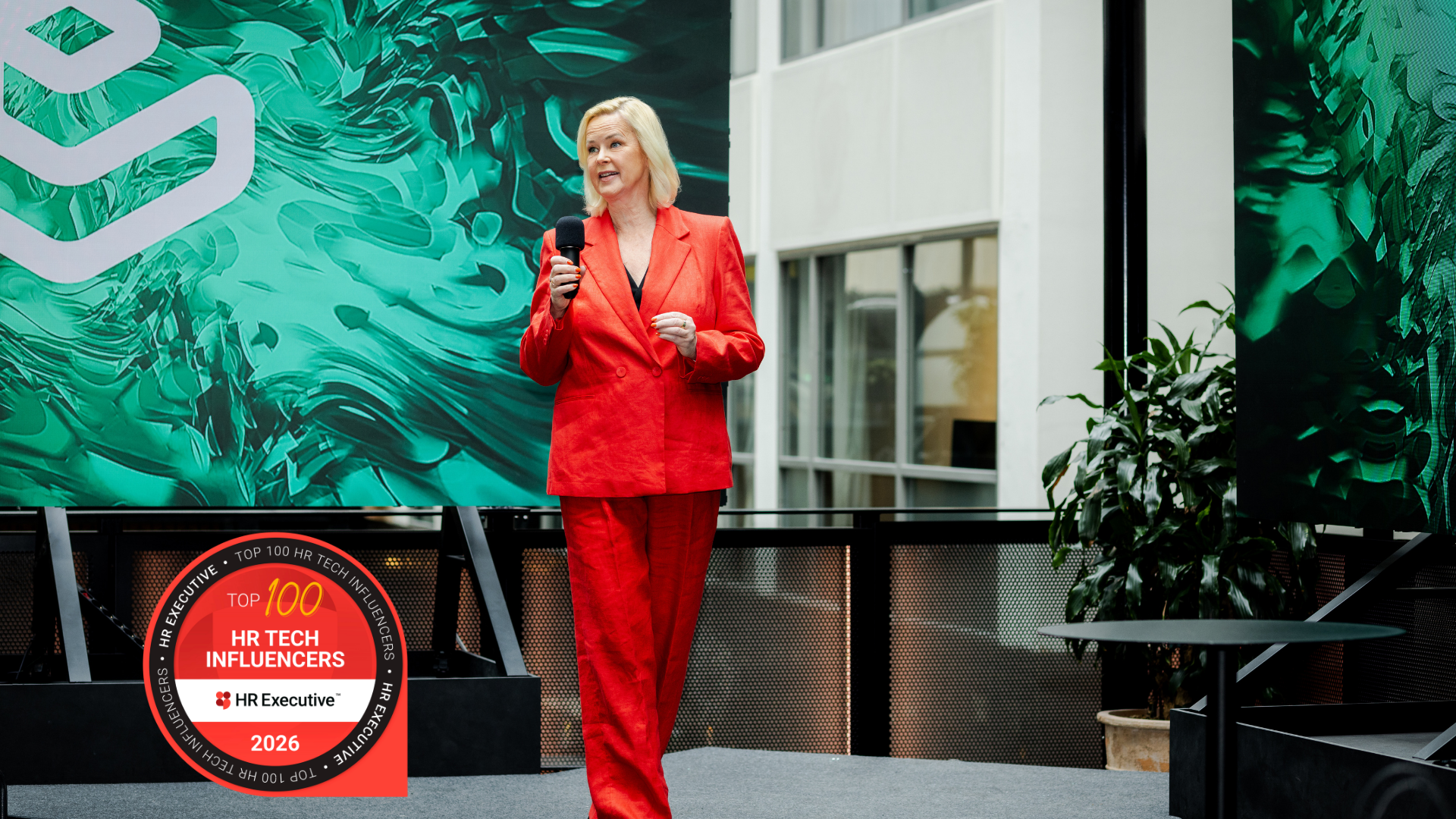
Also a proud member of the group Top 100 HR Tech Influencers globally 2024 & 2025 🙏