This month's theme is the shift in the AI conversation. At HR Tech Europe in Amsterdam, hardly anyone was still asking whether AI should be used, or which tool to choose. The question has moved on, to how we build organisations that can actually benefit from the technology. The column reflects on what I'm taking with me from the event, and why the Nordics risk falling behind as Europe now moves on to the next phase.
This month I also took part in a Comp & Ben network where we discussed a question that will fundamentally reshape the role. When AI changes how work is done and what value different roles create, how does that affect the way we pay and reward? It's not about how Comp & Ben itself uses AI, but about how the function needs to be ready when the entire logic behind compensation and rewards shifts. Gartner's research further down in the newsletter points to exactly the same thing.
On top of that, it's been an eventful month. Alva Labs launches its AI Hiring System, Deel challenges the Swedish ATS players with its own recruitment system, Tilda becomes Shiftic, TicTac Learn acquires in France, Zalaris is taken private, Visma postpones its London IPO, and Accel-KKR builds a Nordic HCM platform. Gallup shows that the Nordics break the European engagement trend, while the job market outlook is deteriorating. And Oracle, Gloat and Workday roll out agentic HR at full scale.
_____________________________________
🤝 This month's sponsor:HR Digis Nordic market opportunity report

Are you, or a vendor you work with, considering entering the Nordics, or expanding from one country to more?
Then the Nordic HR Market Opportunity Report is built for you. A strategic guide for international HR Tech vendors evaluating growth in Sweden, Denmark, Norway and Finland. It covers buyer behaviour, competitive dynamics, AI adoption, white space, go-to-market and regulatory context, country by country.
Based on 30+ sources, validated by subject matter experts in all four countries, and shaped by my own advisory work in the region.
This isn't a generic market overview. It's an independent analysis built for real go-to-market decisions, made for vendors.
A practitioner-focused report will follow later this year.
_____________________________________
Aren’t you already subscribed to the newsletter?
⇢ Register your e-mail here for the newsletter in English.
⇢ Sign up with your email here for the newsletter in Swedish.
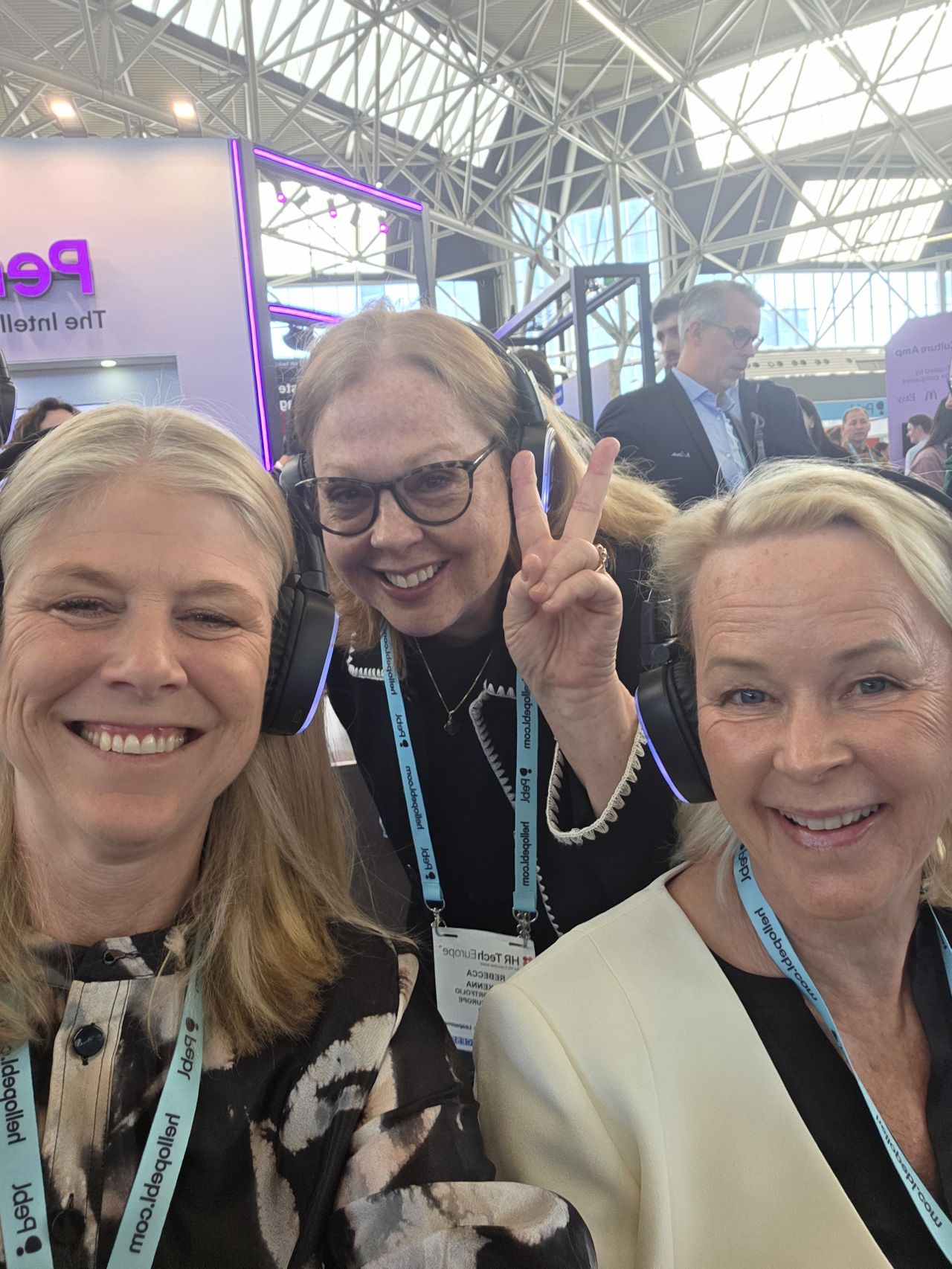
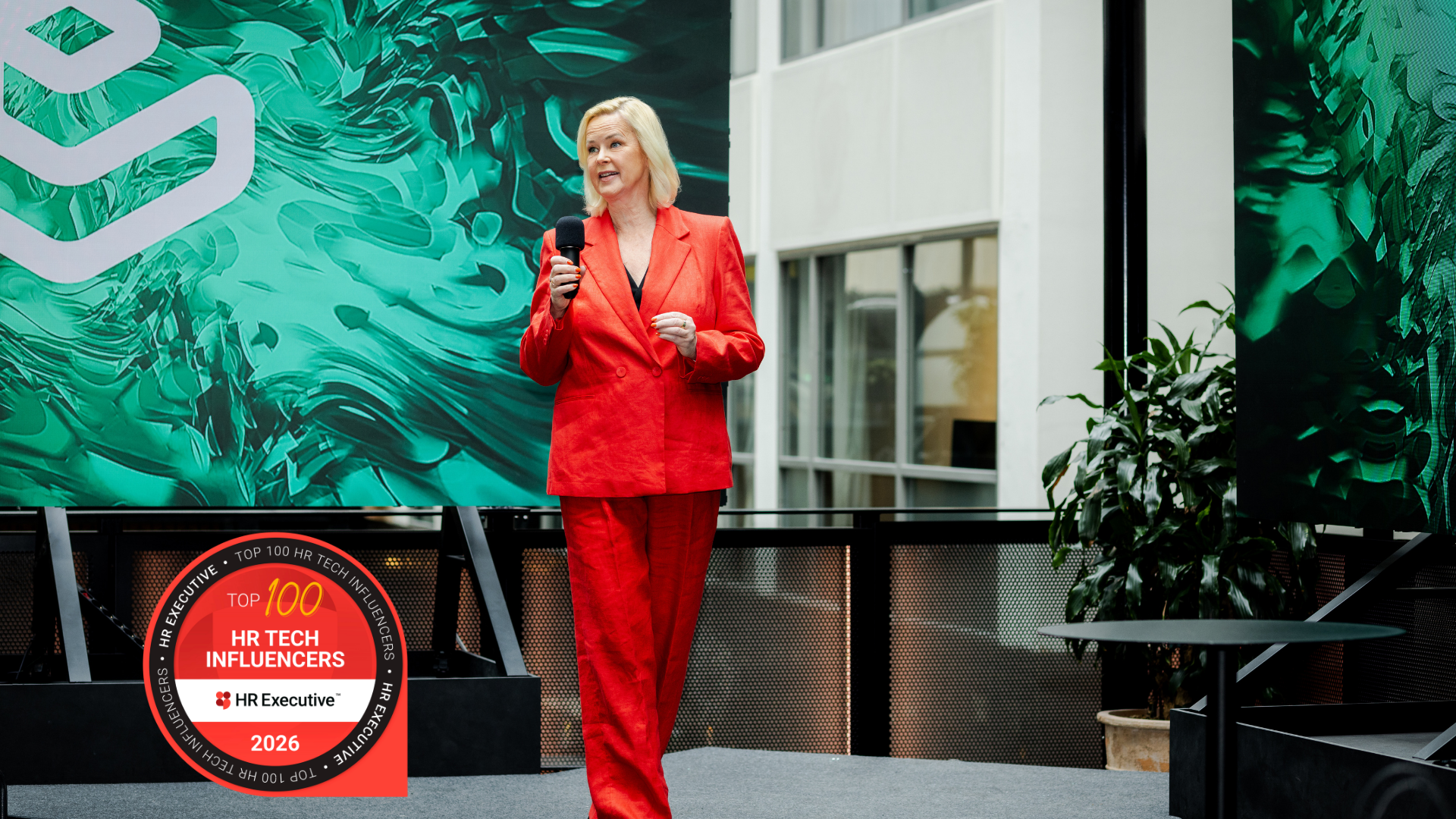
Last week I was in Amsterdam for HR Tech Europe, the largest HR Tech event in Europe. I moderated the panel "The Agents Have Arrived: How HR Can Shape the New Age of Work" and ran my own Ask the Experts session on the gap between HR Tech, AI and actual use.
The obvious thing was that everyone was talking about AI. The most interesting thing was what people were no longer discussing.
In the conversations during coffee breaks, in Ask the Experts, in think tanks and in the many meetings (which are really the whole point of an event like this), the same conclusion kept coming up almost regardless of who I spoke with.
It's not about the technology. It's about leadership, culture, data, organisation, learning speed. People.
Two years ago, the main question was "should we start using AI?". A year ago, it was "which AI tool should we choose?". At HR Tech Europe 2026, hardly anyone was asking either. The question had moved on.
The new question is: how do we build an organisation that can actually benefit from AI?
That's an entirely different kind of question. It's not about tools, it's about conditions. Data quality. Integrations. Leadership willing to prioritise. Skills among leaders and employees. Trust. Clear goals. Learning speed.
ADP had a session titled "AI is Everywhere in HR, but Real Impact Still Lags". That sums up where Europe stands: AI is everywhere, but the impact is conspicuously absent.
What does get little coverage from the event is where the technical development is actually heading. Beyond the big words about "AI agents", a concrete shift is happening right now: value is moving from individual HR systems to orchestration across systems.
Josh Bersin spoke about "superagents" that connect a company's data. One of the panellists had a sharp formulation: "If we thought integration between regular software was complex, it's nothing compared to AI orchestration." And beneath the surface, MCP, Model Context Protocol, is being discussed. It's the open framework rapidly becoming the standard that lets agents talk to different systems at the same time.
That means something concrete. The HR system's interface matters less than what's stored in it and how it can be used. Data becomes the core. The platform becomes just a place where the data happens to live. And how systems are built, and whether they allow orchestration, becomes critical.
Only 9% of Nordic organisations have full integration between their HR systems. Just 4% have integration between HR data and business data. Only 23% have a defined HR Tech strategy, compared with 47% in the rest of Europe.
So we're talking about orchestration while we don't even have the foundational data in place.
What I saw in Amsterdam was a discussion that has moved past "should we start?" and is now about rebuilding the foundation. In the Nordics, most organisations are still struggling with the base platform. We talk about AI agents at conferences, but we don't even have a unified way of handling skills data, payroll data or workforce scheduling.
It's not the technology's fault. It's prioritisation, leadership and investment logic. The same invisible wall I wrote about last month.
Stop chasing AI tools. On the European stage, that question has stopped being interesting. What's being discussed now is whether your data is usable, whether your systems can be integrated and whether your leadership is ready to own the question.
Start the conversation with leadership about data, not AI. Which decisions would get better if HR data were combined with financial and operational data? That's the question AI orchestration is built on, and without the answer, no tool will help.
Look at which vendors think in ecosystems, not systems. Those who can explain how they interoperate with other tools through open protocols have a future. Those still selling you "one platform that solves everything" are living on borrowed time.
And above all: don't wait. The Nordics are already behind. Waiting until we've sorted out the strategy isn't a strategy. It's a guarantee that the gap will keep growing.
Moving forward takes more than more tools. It takes an honest current state, clear prioritisation, and leadership that owns the question. That's where I come in.
Book an introductory meeting →
What I rely on is data and analysis. And one of the most important sources in the entire global HR Tech industry is Sapient Insights' annual HR Systems Survey, now in its 29th year. It's one of the few studies that provides independent, vendor-neutral data on what's actually happening in organisations.
For it to remain relevant, Nordic voices are needed. Right now we're underrepresented, which means comparisons with Europe become skewed and the Nordic situation isn't properly visible in the reports.
Do you work with HR systems or HR processes? Then I hope you'll take the time to participate. It takes 30 to 60 minutes depending on how deep you want to go.
You'll receive:
💜 Your contribution makes a difference, for you, for me and for the whole HR Tech community. 💜
➡️ Take the survey here (deadline 24 June)
Are you an HR systems vendor and want to distribute the survey? Get in touch.
Today I'm starting with subheadings and grouping the news into four areas:
Swedish Alva Labs presented its "AI Hiring System" on Friday, a complete AI-driven recruitment platform that integrates their psychometric methodology with the entire recruitment flow, from job profile to hiring decision. It's a clear move from being an assessment tool to becoming a full-scale TA platform.
For Nordic TA functions, it means a new option with a psychometric core, positioned at the boundary between assessment and ATS rather than as a direct competitor to players like Teamtailor. Whether the psychometrics actually become a differentiator in practice remains to be seen once the solution starts being delivered to customers.
👉 https://www.alvalabs.io/webinar/webinar-the-launch-of-the-alva-ai-hiring-system
Stockholm-based recruitment firm Ants launched its new platform Ants Intelligence in mid-April. The platform aggregates industry and salary data from thousands of placements within tech and executive recruitment. The data comes from Ants' own recruitment business and is packaged as insights on timelines, processes and salary levels. A deeper annual report based on 2025 placements is promised within a few weeks.
It's an interesting move where an operational recruitment agency packages its transactional data as an open product, a Swedish counterweight to global salary data services that rarely have Nordic relevance. The question is whether the data volume is enough to genuinely challenge established sources like Universum or LinkedIn Salary Insights.
Malmö-based Tilda, one of the more high-profile Nordic players in AI-driven change management, changed its name to Shiftic in mid-April. According to founder Bella Funck, the rebrand reflects the company's evolution into "a system built to drive change until it sticks", and a free version of the platform was launched at the same time.
It's a niche player in a fast-growing segment, especially when reports like Docebo's "85% say AI training doesn't help on the job" continue to confirm that technology is rarely the bottleneck, adoption is.
Malmö-based TicTac Learn, one of the Nordics' leading players in digital L&D and LMS, has acquired the French software company Distrisoft. The acquisition is expected to increase revenues by more than 30% and is a clear step in taking TicTac Learn from Nordic market leader to European player. The company is targeting revenues of more than 500 million SEK in 2026.
It's a market in motion. Nordic companies with proven products and strong home-market positions are now expanding into Europe, and the L&D segment is one of the more interesting ones, given Fosway data showing that 66% of L&D professionals are dissatisfied with their current platform.
👉 https://www.tictaclearn.net/news/tictac-learn-acquires-distrisoft
Swedish Flex HRM is launching its "Pay Equity Navigator". It's a tool for systematic job evaluation, pay mapping and pay gap analysis, directly aimed at meeting pay transparency requirements.
It's a well-timed product release that shows Nordic vendors are taking the directive seriously even as the politics waver. For HR teams that want a structured workflow for pay transparency, regardless of how implementation ends up, it's worth a look.
Danish Worksome reports a record year with more than 60% revenue growth and a profit for the first time. In parallel, the company was named "Leader" in Everest Group's PEAK Matrix for Freelancer Engagement & Management Systems 2026, for the second year running.
It's a strong signal that the market for contractor management and external workforce management is maturing rapidly. For Nordic HR leaders working with hybrid workforces of employees and freelancers, Worksome is now a clear option.
Norwegian PE firm Norvestor made a recommended bid in March for HR and payroll system provider Zalaris ASA. CEO Hans-Petter Mellerud and the rest of the leadership team remain as co-owners in the new private structure.
The deal is one of the clearest signs that Nordic HR Tech is attracting serious PE capital. Zalaris, which delivers HR and payroll services across the Nordics, is being taken private to accelerate growth without quarterly exposure. It's a pattern we keep seeing repeated in the industry, and a signal that the consolidation wave in the Nordic market isn't over.
What was meant to be one of Europe's largest IPOs in years will have to wait. Visma, one of the Nordics' largest players in HR, payroll and ERP, has according to Bloomberg announced that the planned listing on the London Stock Exchange has been pushed to 2027. The reasons are market turbulence and a tech-driven decline linked to AI uncertainty.
An IPO process typically increases pressure on growth, pricing and margin, and a postponement changes that dynamic. IPO or not, Visma continues to consolidate its position, and that affects everyone evaluating alternatives in that segment.
The Finnish software group Finago, which owns Procountor and Finago Mepco, received approval from the Finnish Competition and Consumer Authority on 8 April to acquire UKKO.fi, Finland's leading platform for self-employed workers and freelancers. The same day, Lars Engbork (former CEO of SuperOffice and e-conomic) took over as the new group CEO with a stated ambition to drive Nordic expansion.
Finago is now being built into an ecosystem covering the full spectrum from freelance to established company, a clear response to how the boundaries of the labour market are blurring. KKR-owned Finago has already merged Accountor Software, 24SevenOffice and Heeros under one brand and now has more than 170,000 customers in the Nordics. For Nordic HR leaders, it's a company worth following. With a stronger combined platform, KKR funding and new leadership, it could come to challenge existing players in payroll and HR systems across the region.
👉 https://finago.com/news/finago-continues-to-grow-agreement-on-ukko-fis-acquisition/
US PE firm Accel-KKR is taking over the majority of Danish workforce management company Tamigo, bringing together three complementary Nordic HR platforms in the same portfolio: Eletive (SE, employee engagement), 4human (NO, core HR and payroll) and Tamigo (DK, scheduling and time). A genuinely Nordic HCM stack is taking shape.
It's a classic PE consolidation strategy, buy best-in-class in each category and build a whole. For Nordic HR buyers, it's worth following. If the platforms are integrated more deeply, a new challenger to Visma and Sympa emerges in the Nordic mid-market segment. The question is how far the integration is actually pushed. PE consolidations often end up as parallel companies under the same umbrella rather than a single product.
👉 https://vikinggrowth.com/news/viking-growth-exits-tamigo-to-accel-kkr
In the previous newsletter, we reported that Gallup's US data showed a ten-year low in engagement at 31%. Now that "State of the Global Workplace 2026" has been published, we can see whether the same trend holds in Europe and the Nordics. Globally, engagement lands at 20%, and Europe as a region at 12%, the lowest in the world. The Nordic countries break the pattern: Sweden 25% and Denmark 22% (both close to the highest levels Gallup has measured for each country). The most worrying part of the Nordic data, however, is hidden in the job market sentiment. Optimism about finding a new job is plunging in Sweden (-12 percentage points) and Finland (-18). It mirrors rising unemployment in SCB data and signals that the Nordic labour market's aura of security is starting to fade.
👉 https://www.gallup.com/workplace/697850/state-of-the-global-workplace-regional-data.aspx
McKinsey shows that 76% of Western employees used AI in 2025, up from 30% in 2023. Despite the rapid shift in how work is done, what employees fundamentally value, development, flexibility, leadership, has remained stable across four years of research.
The most useful finding for HR, however, is something else. Those who use AI the most report both the highest engagement and the highest intent-to-quit, 7 to 10 percentage points above non-users. They know their skills are in demand on the market.
The technology moves fast, but human motivational factors are stable, and the AI-skilled know their market value. HR strategies built on rolling out tools without a parallel investment in development, leadership and retention of AI stars risk losing exactly the employees they need most.
SHRM's State of AI in HR 2026 is based on around 1,900 HR professionals in the US and is one of the most cited industry reports so far this year. The findings don't make for comfortable reading. The HR function rarely leads AI implementation, taking a back seat to IT, legal & compliance, and cross-functional teams. The only area where HR comes close to a leading role is upskilling and reskilling (28%), and even there it's narrowly beaten by cross-functional task forces (29%). When it comes to overall AI strategy and vision, 52% of organisations report that the HR function isn't directly involved or part of cross-functional collaboration.
How relevant is this for the Nordics? The HR function in Scandinavia generally has a stronger position than in the US, and the figures probably don't transfer directly. But the pattern is worth watching. As AI investments increase and IT departments take the lead in tool selection, the same shift could happen here. What's a US fact today could be a Nordic trend in two years.
👉 https://www.shrm.org/topics-tools/research/state-of-ai-hr-2026/full-report
Gartner's CEO survey 2026 shows that 80% expect AI to force significant to moderate change in their operational capabilities, a shift from digital business to "autonomous business" where AI agents and machine customers make decisions and create value.
That puts HR in a strategically central position. It's HR that owns change management, skills development and organisational design. If 80% of CEOs expect significant transformation, is HR ready to lead that work? I suspect the answer varies sharply from organisation to organisation.
Gartner published research showing that traditional performance pay models are being challenged as AI changes how work is done. AI amplifies long-standing problems, lack of clarity about what should be rewarded, increased risk of bias in AI-supported evaluations, and harder decisions within already tight pay review budgets.
It's a fundamental challenge for how Nordic organisations measure and reward performance. The next generation of pay review processes will need to handle AI usage as a skill dimension, and that requires HR to own the conversation with CFO and the business.
At Oracle AI World Tour in New York on 9 April, Oracle presented eight new AI agents built directly into Fusion HCM, covering recruitment, scheduling, contract compliance, talent calibration, learning and HR service. Unlike AI assistants, these agents act autonomously and complete tasks within Fusion's existing security and access frameworks.
It's a breakthrough in the shift from AI as support to AI as performer. When Oracle (with its massive customer base) makes this standard, it could change what HCM customers expect from other vendors.
Workforce intelligence company Gloat launched its new platform "Gloat Agentic HR" in March, built around its own context layer called "Loomra". Loomra brings together data on employees, skills, career paths and organisational structure into a shared layer, and lets AI agents use that data to autonomously handle tasks like talent redeployment, skills gap analysis, internal recruitment and succession planning. The agents run where employees already work: in Microsoft Teams, Copilot, Slack and Google Chat.
Josh Bersin describes Gloat's move as part of a broader shift towards what he calls "SaaSpocalypse", the period when traditional SaaS systems start being replaced by agentic platforms that act, not just report. The battle over who owns HR data and HR intelligence in the organisation is intensifying significantly.
👉 https://joshbersin.com/2026/03/gloat-enters-the-crowded-war-for-ai-agents-in-hr/
Workday and Achievers have launched "Workday Recognition provided by Achievers", Achievers' AI-driven recognition and rewards solution, integrated directly into Workday HCM. The AI identifies skills patterns and performance trends to trigger recognition at the right moment.
It's a partnership rather than a merger, but the effect for the customer is similar: one tool less to integrate and maintain. For Workday customers it's practical, but it ties the recognition strategy more closely to Workday as a platform, which should be weighed in when the contract comes up for renewal.
Worth noting is that Achievers, despite its global size, is relatively unknown in the Nordics. Pure recognition services in the American style, peer-to-peer recognition with a catalogue of gift cards and rewards, have never really taken off here. Nordic organisations tend to build recognition into broader engagement or performance platforms (Winningtemp, Eletive, &Frankly, Brilliant) rather than buying a separate solution. It's a cultural difference worth keeping in mind when Workday customers in the Nordics evaluate whether the new recognition module adds value.
Global HR platform company Deel presented its new recruitment system at the "The Big Deel 2026" conference in March, with general availability from 26 March 2026. The product is built directly into Deel's HRIS and connects recruitment to payroll, IT provisioning and visa management in a single flow.
It's a clear platform strategy. Deel wants to own the entire lifecycle from candidate to payroll payment and is now competing directly with dedicated ATS systems.
👉 https://hrtechfeed.com/big-deel-eor-platform-adds-ats/
The goal of the newsletter is to write about news in the HR Tech market and the areas of digitalization, AI, and innovation for management and HR.
About me, the author
My name is Anna Carlsson and I'm a strategic advisor and HR Tech analyst. I help HR and management make wise decisions in HR Tech, AI, and digitalization – through strategies that are clear, sustainable over time, and implementable. Assignments can be anything from one hour of consultation to longer projects where I follow you all the way from the current situation to results.
I run HR Digi, which supports HR practitioners and HR Tech companies to navigate, understand, and lead in a digital age. And it's not always a big change that's needed – sometimes it's enough to clarify, prioritize, and communicate strategically to achieve success.
Read more at hrdigi.se or Book a digital coffee with me.
Also a proud member of the group Top 100 HR Tech Influencers globally 2024 & 2025 🙏