.png)
There are now only a few working days left in 2025, and it’s time to sum things up.
My biggest event in recent weeks is that I suddenly felt such a strong urge to continue with the podcast – so I did!
The difference is quite big compared to before. Now the episodes are short and in English. A first episode was released on Monday, and more will follow after the New Year.
That’s why it got a new name, “The HR digi Podcast,” and a new logo.
Working smarter.
How I create and deliver for my clients. How I respond to emails. How I do accounting and marketing. How I create a podcast. And how I create newsletters.
Everything has gotten an AI touch 🪄
And I truly feel that I deliver higher quality and experience less stress.
In the final reflection of the year, I look at how the HR tech field has developed during 2025 – or has it?
The 2026 event list has been updated with news, and these are marked with: New 🌟
Aren’t you already subscribed to the newsletter?
⇢ Register your e-mail here for the newsletter in English.
⇢ Sign up with your email here for the newsletter in Swedish.
A year ago, I was convinced that 2025 would be the year we moved from words to action. When the outlook for 2024 was made, it was clear that Sweden was falling behind – but I believed in a turnaround. The recession would ease, AI implementation would pick up speed, and we would begin to see real change.
Now, as 2025 draws to a close, I am forced to conclude the opposite.
We have talked more about AI than ever before – but in Sweden we have not moved forward to any significant extent.
A few more HR system projects. A few more individuals within HR organizations with a title like “HR Tech Lead” but no real major steps forward.
We are an innovative region with high digital competence. We have some of the world’s best 5G coverage. A majority of the population has strong digital skills. We produce more unicorns than most other regions.
Yet despite this, we lag far behind when it comes to digitalization within HR. Swedish employees use AI on a daily basis to a much lower extent than the global average.
Our Nordic neighbors are somewhat higher, with Denmark in the lead – but the entire region is falling behind. We have the competence and the infrastructure, but we are not using them.
Globally, the signals are clear. Investors are pouring capital into HR tech like never before. During the first three quarters of the year, nearly USD 5 billion was invested – an increase of around 20% compared to the same period in 2024. Fifteen mega-deals of over USD 100 million each show massive confidence in the sector’s future.
The money is going into solutions for compensation and pay intelligence, benefits systems, AI-driven recruitment, and modern payroll solutions offering flexible pay and financial wellbeing. HCM platforms account for the majority of the capital.
The question is: Where are the Swedish and Nordic companies in this investment wave? And even more importantly – why aren’t we buying these solutions when they are available?
But the problem runs deeper than system choices. Swedish tech companies in HR and recruitment point to something fundamental: half of them cite lack of access to data or poor data quality as the biggest obstacle to being able to implement AI. It doesn’t matter how much capital is invested globally if we in Sweden lack the data infrastructure required.
AI only gains traction when data is open, standardized, and machine-readable. Sweden still lacks common definitions, modern APIs, and coordination across sectors. We have the directives, we have the knowledge – but we do not make the data available that is needed to create real solutions.
Internationally, AI is being built in as standard in HR platforms. Skills mapping is becoming intelligent. Analyses are performed automatically. Employee experience is measured and improved systematically.
In Sweden, we make different choices. We often choose Swedish or Nordic vendors whose systems lack the AI functionality that has become standard globally. Many vendors have outdated technology and are not developing at the pace required.
Organizations that have international systems have the technology – but few have activated new functionality or are even aware that it exists. We cling to familiar ways of working even when new opportunities are available.
The problem is not a lack of ambition or knowledge. It is structural. We are not sufficiently involved in AI and technology decisions within our organizations. HR may be represented in the executive team – yet is still not involved when the crucial choices are made.
We are overloaded and try to create results by doing more, not by working differently. We don’t take the time for innovative thinking. We wait for the perfect solution instead of testing and learning. Or are we waiting for someone else to solve the “problem” for us?
The difference compared to the rest of the world is becoming increasingly clear. In larger European organizations, strategic workforce planning has become a top priority. Data and analytics are ranked higher than employee experience as drivers of HR success. AI and automation are seen as core priorities, not side projects.
In Sweden and the Nordics, we still primarily focus on operational challenges – recruitment, retention, and wellbeing. Digitalization ends up far down the list. We talk about becoming data-driven but continue to make decisions based on gut feeling.
The recession has of course played a role – many projects have been paused or postponed. But that is precisely why the problem becomes even bigger. While we waited, others continued to develop. The longer we stand still, the harder it becomes to catch up.
We are cautious – we want everything to be secure, compliant, and fair before we move. That is right, but we cannot stand still while waiting. And when Swedish vendors do not deliver what we need, we must dare to look at international alternatives.
We talk about value but don’t measure it. We want to be strategic but remain operational. We discuss AI policies – but HR is rarely involved when they are developed. We invest in tools, but not in competence.
What is truly worrying is not that we lack knowledge of where we are heading. It is that we are not moving in that direction. We have the resources, the competence, and the insights. But something is missing.
When the economy turns – and forecasts point toward an improvement during 2026 – we must not make the same mistake again. We cannot wait for the “right moment” to begin. The organizations that have used the downturn to prepare, test, and learn will accelerate when the economy rebounds. Those that waited will lose even more ground.
Research is clear: organizations with high digital maturity perform better. There is a direct link between technology usage and organizational performance.
HR can no longer be the function that reacts to change. We must be the ones who drive it. We must demand to be involved when technology decisions are made. We must dare to challenge vendors who do not deliver. We must take the time to think differently.
And we must realize that the future is not about more tools – it is about the courage to use them differently.
Investments in HR and work tech are growing significantly worldwide. According to WorkTech’s Q3 2025 Global Work Tech VC report, nearly USD 5 billion was poured into HR tech during the first three quarters of the year – an increase of around 20% compared to the same period in 2024. A total of 15 mega-deals (over USD 100M) were recorded, showing continued confidence from venture capital in the sector.
Four areas stand out:
Compensation and payroll systems with a focus on pay intelligence and market data
Benefits platforms attracted the largest individual investments
Candidate and recruitment solutions, especially within AI-driven screening and scheduling
Payroll is expanding beyond traditional systems toward solutions offering flexible pay and financial wellbeing
At the same time, HCM platforms account for the majority of the capital and maintain their dominance as the largest investment category.
👉 https://hrexecutive.com/why-investors-are-pouring-billions-into-these-hr-tech-categories/
Swedish JobTech has released the report The Future Labor Market in the AI Era, which describes how AI is already transforming matching, learning, and workforce transitions. The report shows that the challenges do not primarily lie with individuals, but with structures, data, and how work is organized – where traditional tools such as CVs, job ads, and education systems are no longer sufficient.
A recurring message is that AI can become an enabler of a more inclusive and sustainable labor market, but only if it is combined with open data, shared standards, and a clear human focus.
Jobylon’s report shows that recruitment is now entering a new phase. The focus is shifting from individual AI tools to the need for AI-mature TA teams with the right skills, governance, and ways of working. At the same time, demands for regulation and transparency are increasing, where HR needs to be able to explain how AI is used in selection and decision-making.
The report also points to a clear shift toward skills-based workforce planning, an increased need for trust when AI is used on both sides of recruitment, and a stronger focus on candidate experience and data-driven quality in hiring – not just time and cost. Several experts contribute perspectives on how recruitment needs to evolve ahead of 2026.
👉 https://www.jobylon.com/guides-reports/2026-recruitment-trends
VONQ has recently launched EQO, a suite of AI-driven “Recruitment Agents” that automate screening, interviews, assessment, and shortlisting in recruitment processes.
The solution integrates seamlessly with ATS and HCM systems via their HAPI platform and targets high-volume and global recruitment to reduce manual work and improve the candidate experience. EQO marks a shift toward agent-based AI that delivers fewer but better-qualified candidates, and has already been deployed in markets such as the Netherlands, the United States, and Germany.
Well, candidates use AI, of course. If you work with recruitment, it may be worth keeping an eye on what’s available on the market. Here is one of these new and exciting vendors.
I would like to thank all readers, listeners, customers, and partners for the past year. See you and hear from you again in 2026.
Want me to come and talk about future challenges, choices, and strategies with your team? You can reach me at anna.carlsson@hrdigi.se.
The purpose of this newsletter is to share news from the HR Tech market and highlight trends in digitalization, AI, and innovation for leaders and HR professionals.
About me
My name is Anna Carlsson, and I’m a strategic advisor and HR Tech analyst. I help HR and leadership teams make smart decisions in HR Tech, AI, and digitalization – through strategies that are clear, sustainable over time, and actionable. Assignments range from one-hour advisory calls to long-term projects where I support you all the way from current state to concrete results.
I run HR Digi, supporting HR professionals and HR Tech companies in navigating, understanding, and leading in a digital era. And it doesn’t always take major change – sometimes it’s about clarifying, prioritizing, and communicating strategically to achieve success.
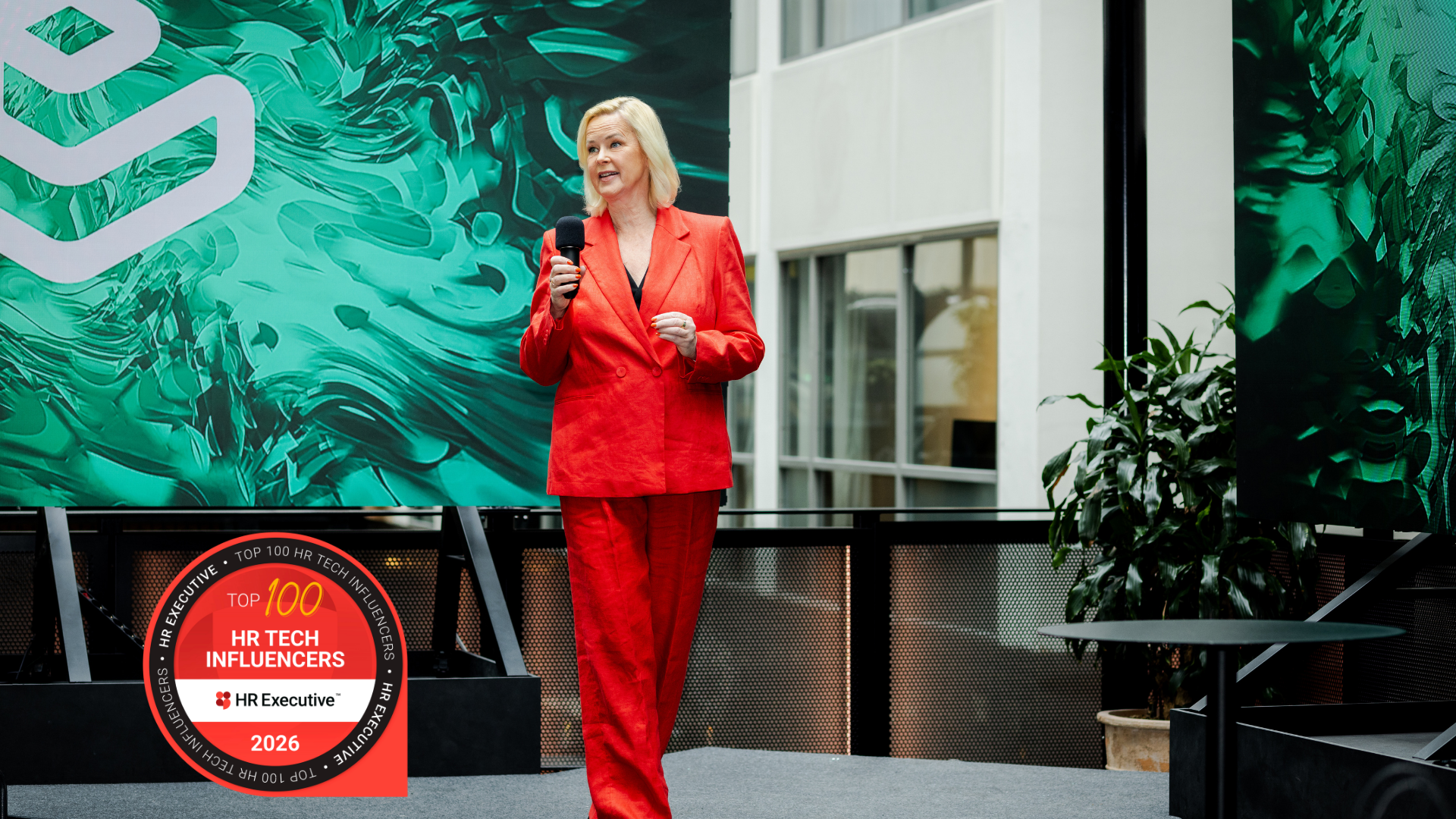
Also proud member of Top 100 HR Tech Influencers 2024 & 2025 🙏