.png)
Hello January 2026!
After trying to send out newsletters every other week, I’m returning to monthly updates, which feels more realistic for me to have time to write—and for you to have time to read.
This month’s reflection is about seeing signs of improvement in the economy. And that we can then begin investing in ourselves again. And in the organization.
Aren’t you already subscribed to the newsletter?
⇢ Register your e-mail here for the newsletter in English.
⇢ Sign up with your email here for the newsletter in Swedish.
After several years of caution, a window is now opening. The economy is turning upward – and with it, there should be new room for HR to maneuver. Forecasts for Sweden in 2026 point to GDP growth around 2.8 percent and inflation below 2 percent. Lower interest rates and a more expansionary budget are strengthening household purchasing power – giving companies better conditions to grow.
In the rest of the Nordic region, we see similar bright spots. Denmark leads with strong growth driven by successful export companies. Norway has managed relatively well through the downturn. Finland, which has had it tougher, now faces potential recovery. Overall, the Nordic countries are expected to grow by 1.5-2 percent during 2026.
As conditions improve, several things happen that directly affect HR:
Uncertainty about AI sector valuations in the US, concerns in financial markets, and political instability also affect Swedish and Nordic organizations.
For Nordic organizations, this means that even though the economy is improving, we need to act thoughtfully. This is not the time for general cost increases, but for targeted investments with a clear goal.
But right now, there's room to start planning for development again. The question is: what should we prioritize?
Major changes are underway in AI, digitalization, and data. The challenge is that these big questions easily become abstract without a concrete plan.
And we need to have different perspectives simultaneously – both long and short term. It's about being able to focus on daily operations while planning for the future both 10 years ahead and three years. In addition, we need to understand where we are on the development ladder with our organization – are we far ahead or further behind?
And all of this simultaneously – in organizations already running at full speed.
Before we can invest in new technology – which is a natural next step – we first need competence. It doesn't help to buy "the best systems" if we don't have the knowledge to use them correctly or understand what's possible.
And we need other perspectives to understand what is actually possible. A competence mapping in the HR team gives us a picture of where we stand. But to understand where we can go, we need inspiration and concrete examples of what others are already doing. And these are often found outside the country's borders.
That's why now is the right time to invest in participating in events and training that open our eyes to the possibilities.
When there's room to invest in competence, the next question is not whether – but what and where. Different roles need different types of events for the investment to actually have an effect. Here are some examples.
Need: Strategic perspective, environmental monitoring, and comparison with other organizations.
Maturity: Suits both low and high maturity – but for different reasons.
Tip: HR Tech Europe and their Stockholm event HR Tech Europe meetup
A good choice for HR leaders who need to understand where HR Tech, AI, and data are heading, what choices await – and how other organizations reason. Less focus on details, more on direction and consequence.
Need: Need to stay at the forefront and get thought-challenging perspectives.
Maturity: High
Tip: HR Tech Las Vegas
A format that combines stories from really advanced organizations with vendors and a whole range of analysts.
Need: Understand HR's needs, data flows, and the interplay between systems and organization.
Maturity: Particularly important in organizations stuck between HR and IT.
Tip: HR Tech Europe (together with HR)
When HR and IT participate together, a common language is created around architecture, data, and possibilities. For many organizations, this is precisely a crucial step to move from ambition to implementation.
Lower maturity:
Use events to create consensus, understanding, and a common vision. Here, breadth and perspective are more important than details. Training can also be a good choice here.
Higher maturity:
Use events selectively – with a clear purpose. What should we bring home? What decisions should this support? Otherwise, inspiration risks stopping at just inspiration.
The important thing is not just to consume the inspiration but to connect it to action. After an event or training: what's the next step? What collaborations do we need to strengthen between HR, IT, finance, and marketing? What analysis needs to be done of our current systems and competencies? And only then – when we have the competence in place – can we invest in the right technology and systems that actually drive us forward.
The economy now gives us this chance. Let's not just look at numbers and wait for perfect timing – the future is created by those who take initiative and invest in competence and development when there's room for it.
Swedish Grade and Norwegian Talentech have completed their merger following approval from competition authorities in the Nordic countries. The two companies now form a joint entity under the name Talentech with nearly 4,000 customers in the Nordics.
The merger, announced in November 2025, is structured as a 50/50 split between owners Viking Growth (Grade) and Verdane (Talentech).
Grade, founded in 1995, is an established player in HR, training and talent management with over 1,600 customers. Talentech, established in 2019, has built a strong position in recruitment and onboarding with 350,000 annual recruitment projects.
Walter Leicher has been appointed CEO of the new Talentech. "HR teams today face an increasingly complex reality. The new Talentech will help even more customers manage recruitment, onboarding and employee development," he says.
For customers, the merger involves no immediate changes to services, contracts or contact persons.
👉 https://www.grade.com/en/grade-and-talentech-are-coming-together/
In January, Workday completed its acquisition of Pipedream, an integration platform for AI agents with over 3,000 ready-made connections to business systems.
This is Workday's latest acquisition in a series of strategic purchases. After HiredScore, Paradox, Flowise, and Sana, they now gain access to a platform that allows AI agents to connect with third-party systems, retrieve data, and automate workflows.
Pipedream has over 5,000 customers and an active developer community. Their connections include everything from Asana and HubSpot to Jira and Slack.
The strategy is clear: Workday is systematically building an ecosystem for AI agents. With Pipedream, they can not only give their agents access to HR and finance data from Workday – but also connect them to the rest of the company's system landscape. An example they themselves highlight: an agent could accelerate employee conversations by retrieving project details from Jira, requesting feedback via Slack, and updating performance data directly in Workday.
This isn't just a product gap they're filling – it's an investment in making Workday the platform where work is both planned and executed.
👉 https://newsroom.workday.com/2025-11-19-Workday-Signs-Definitive-Agreement-to-Acquire-Pipedream
The event calendar has received new additions – here are three important events to book:
February 12 – Stockholm: HR Tech Europe Meetup HR Executive invites to a meetup for those who want to keep up with European HR Tech developments.
February 18 – Stockholm: Sweden People Analytics Meetup Sweden People Analytics meetup group gathers the community to delve into how data drives smarter HR decisions.
September 9 – Oslo: Nordic EdTech Summit Nordic EdTech News and WDO are behind this year's major EdTech event – a must for those working with edtech.
The complete event list with all dates and links is available on the website.
This year's salary survey for those working in HR Tech is now open. Last year, 60+ responses came in, which gave a good indication of salary levels based on age, experience, industry, and more.
Respond by February 25 – results will be published shortly thereafter.
👉 https://9paj811sija.typeform.com/to/akDC5H15
The World Economic Forum has released the report "Four Futures for Jobs in the New Economy: AI and Talent in 2030" in connection with their event in Davos this week.
The report presents four possible scenarios for how AI and competence will shape the labor market by 2030. It's interesting that they don't have a prediction and instead provide scenarios. That is, it's difficult to predict the future.
The four scenarios:
1. Supercharged Progress – Exponential AI development meets an AI-ready workforce. Productivity skyrockets, new jobs are created quickly, but social safety nets and ethical frameworks can't keep up.
2. The Age of Displacement – AI develops faster than the workforce can adapt. Companies automate in panic, unemployment rises sharply, and consumer confidence plummets.
3. Co-Pilot Economy – Gradual AI development and AI-ready competence lead to a focus on augmentation instead of mass automation. Human-AI teams reshape value chains.
4. Stalled Progress – AI develops steadily but the workforce lacks critical skills. Productivity increases unevenly, gaps grow, and the economy becomes divided.
The report also provides nine "no-regret" strategies for companies to prepare for any scenario – from starting small and scaling up what works, to investing in human-AI collaboration and multigenerational workflows.
👉 https://www.weforum.org/publications/
Ledigajobb.se, with over one million visitors per month, has identified five trends that will impact recruitment during 2026. AI, new job seeker behaviors, and increased competition for talent are redrawing the playing field.
👉 https://www.hrsvepet.se/artikel/5-rekryteringstrender-som-formar-marknaden-2026
HR Tech veteran Thomas Otter, who has previously worked at both Gartner and SAP SuccessFactors, has written a noteworthy article about the DIY trend in HR systems. He sees how AI tools make it easier than ever to build your own solutions – and some HR departments deliver impressive results. But he also warns of several pitfalls:
HR systems are like nuclear power plants – If they're expensive to build, wait until you see what they cost to maintain, scale, and shut down.
Risk and responsibility – If you "vibe together" a recruitment tool, employment laws and data protection still apply.
The opportunity cost – Just before Christmas, Otter read about a scale-up that shut down its HR system and built their own. The project took six months and was done nicely. But what could the team have built instead?
Otter's conclusion: AI tools have made it easier to build – but for most, it's smarter to bring in the right professional help.
👉 https://thomasotter.substack.com/p/diy-and-hr-tech-some-unsolicited
After studying Microsoft's Ignite conference and comparing it with AI launches from Google, OpenAI, and Anthropic, HR Tech veteran Josh Bersin concludes that Microsoft is well on its way to taking a leading position in corporate AI.
Bersin particularly highlights Microsoft's new launches: WorkIQ (which builds on the company's workflows and business processes), Agent 365 (for managing and controlling agents), App Builder (visual development environment for agents), and Microsoft Foundry (which can handle multiple different AI models, including Anthropic).
Microsoft has also built Copilot agents directly into Word, Excel, and PowerPoint. The Excel agent, for example, understands the underlying models in Excel and can help with complex questions and troubleshooting.
What happens with the competitors?
Google and Gemini 3.0 – Bersin sees Google targeting the CTO and developer community rather than the CIO. A smart move considering that "AI code generators" is already a $5 billion market.
OpenAI – With 800 million users per week, Bersin sees OpenAI as "Consumer AI Agent" with focus on e-commerce, advertising, and the consumer market.
Anthropic – Strong product and good position in corporate and developers, but perhaps lacks the distribution and scale that Amazon could give them.
Oracle, Workday, ServiceNow, SAP – All are adapting aggressively. Workday recently got a new CTO and Chief Product Officer and is rapidly building AI capability through the acquisitions of HiredScore, Paradox, and Sana.
Bersin's conclusion: AI is forcing tech companies to raise their level significantly – and Microsoft is currently showing impressive agility and execution.
👉 https://joshbersin.com/2025/11/could-microsoft-walk-away-with-the-corporate-ai-market/
Malmö-based Hypergene, which develops a SaaS solution for decision support, is buying Stratsys in Gothenburg. Stratsys offers a SaaS platform for compliance and governance aimed at medium and large organizations in the Nordic region.
The deal consolidates Hypergene's position in decision support and strategic management for Nordic companies. Both companies work with cloud-based solutions to help organizations with strategic management and follow-up.
👉 Source: Breakit
Jönköping-based Incredible, which we wrote about last year when they launched Sweden's largest language model under the name VISS.AI, has now taken the next step.
The company has changed its name to Incredible and launched Agent MAX, which they describe as "the most advanced AI agent engine, ideal for in-depth work."
The launch was a success – Agent MAX reached first place on Product Hunt.
From developing Sweden's largest language model to now offering advanced AI agents for work automation, Incredible shows they continue to be at the forefront. The company sticks to its original vision: to make it possible for everyone to automate digital flows at work – even for people without technical skills.
The goal of the newsletter is to write about news in the HR Tech market and the areas of digitalization, AI, and innovation for management and HR.
About me, the author
My name is Anna Carlsson and I'm a strategic advisor and HR Tech analyst. I help HR and management make wise decisions in HR Tech, AI, and digitalization – through strategies that are clear, sustainable over time, and implementable. Assignments can be anything from one hour of consultation to longer projects where I follow you all the way from the current situation to results.
I run HR Digi, which supports HR practitioners and HR Tech companies to navigate, understand, and lead in a digital age. And it's not always a big change that's needed – sometimes it's enough to clarify, prioritize, and communicate strategically to achieve success.
Read more at hrdigi.se or Book a digital coffee with me.
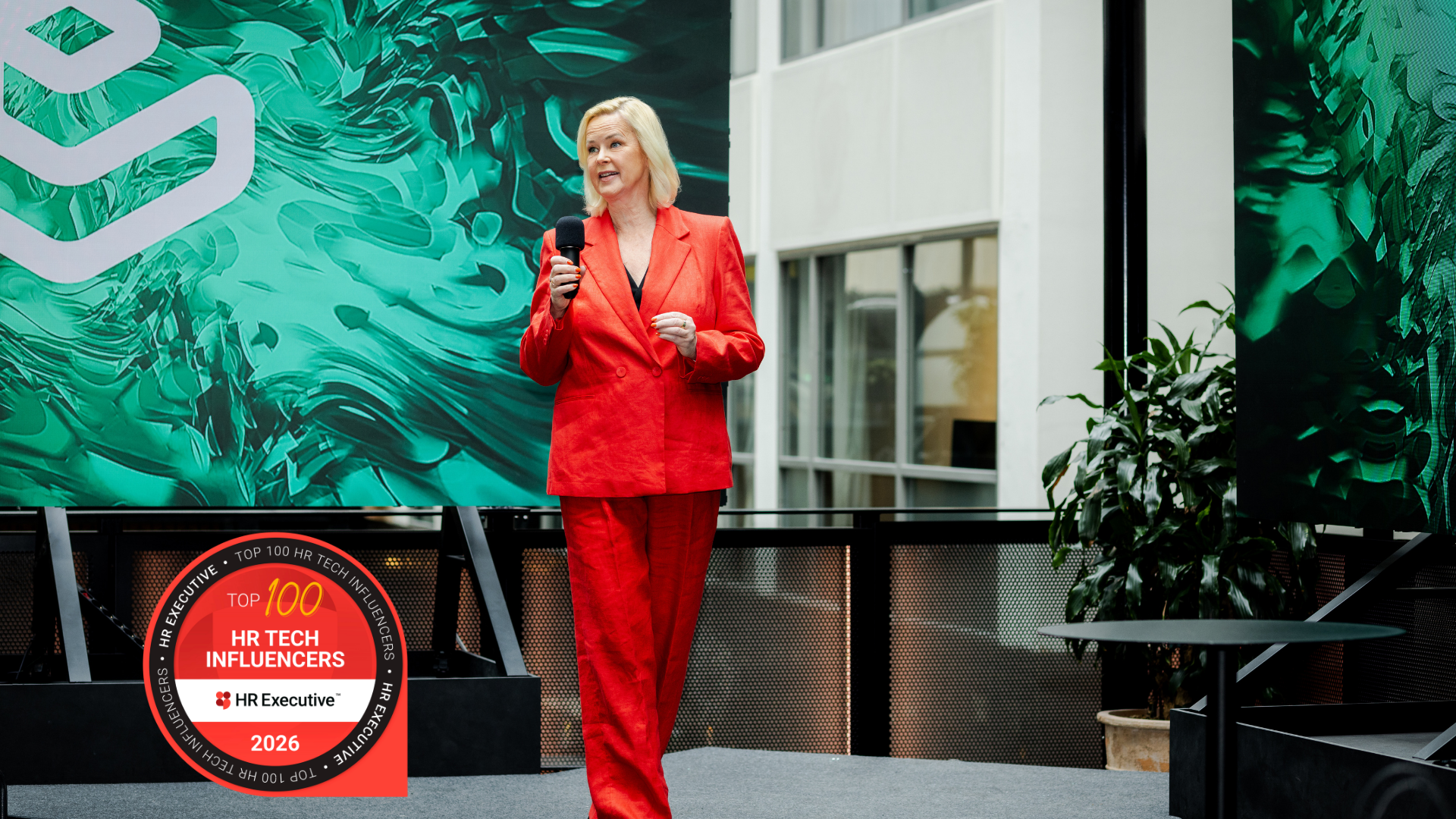
Also a proud member of the group Top 100 HR Tech Influencers globally 2024 & 2025 🙏